
Apr 21, 2026

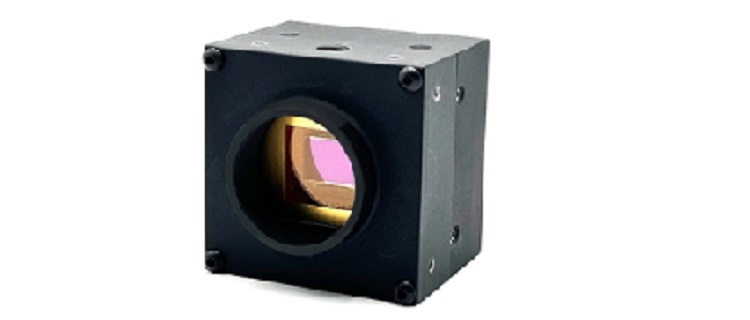
Infrared imaging has become an essential capability in modern sensing systems, especially in environments where visible light is limited or unavailable. Among the available technologies, the ir cmos sensor stands out as a practical solution due to its compact design, low power consumption, and strong system integration capability.
This type of infrared cmos image sensor is widely used in industrial vision systems, automotive safety, security monitoring, and scientific imaging. Its ability to combine sensing and processing on a single chip makes it highly suitable for real-time and embedded applications.
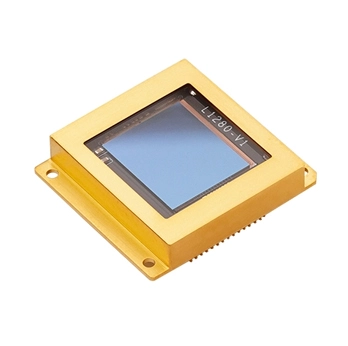
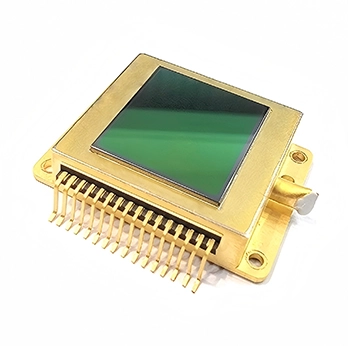
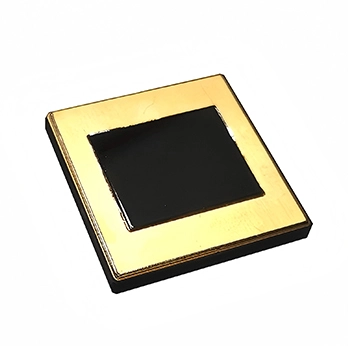
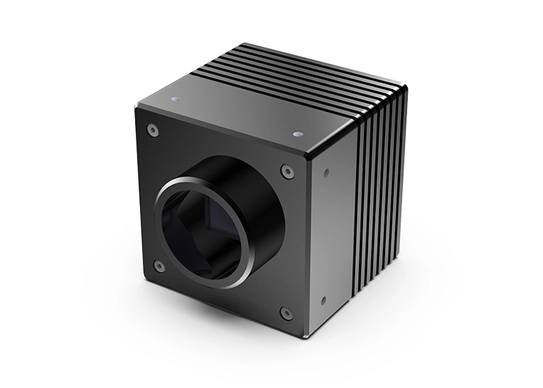
An ir cmos sensor is an infrared imaging device built on CMOS semiconductor technology. It is designed to detect infrared radiation and convert it into electrical signals for digital image processing.
When infrared light enters the optical system, it is focused onto the photodiode array of the sensor. These photodiodes generate electrical charges proportional to the received infrared energy. The signals are then amplified and processed by integrated CMOS circuitry, resulting in a usable digital output.
Compared with traditional imaging devices, this type of infrared cmos image sensor integrates detection and processing within the same chip. This architecture improves efficiency, reduces system size, and supports real-time imaging performance.
At SYTO Photonics, CMOS-based infrared sensing technologies are developed for applications that require stable performance and high sensitivity in demanding environments.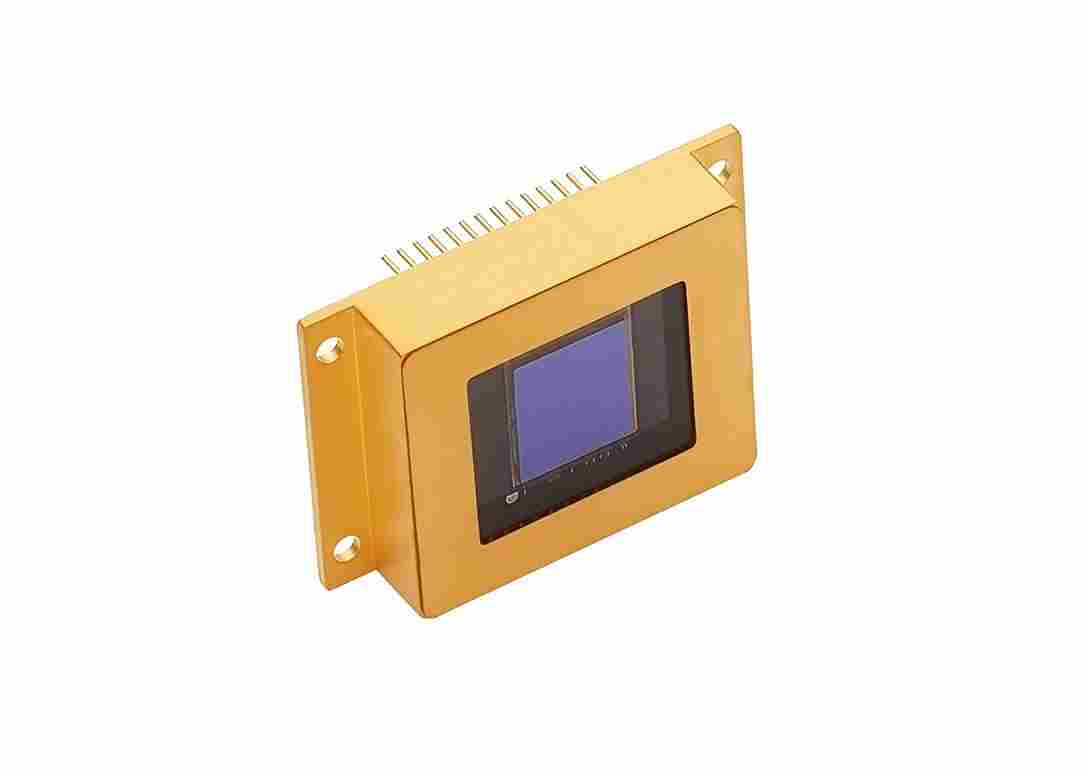
One of the main advantages of an ir cmos sensor is its low power consumption, making it suitable for portable and battery-powered systems. This is especially important in continuous monitoring applications where energy efficiency is critical.
Another benefit is its high level of integration. Because signal processing is embedded directly into the sensor chip, system complexity is reduced and overall reliability is improved. In many designs, the infrared cmos image sensor also helps minimize system size and cost.
Fast readout speed is another important characteristic. This allows the sensor to capture dynamic scenes in real time, making it suitable for motion tracking, automation, and inspection systems.
Modern designs of the ir cmos sensor also provide improved noise control and better infrared sensitivity, enabling stable imaging even in low-light conditions.
In addition, CMOS manufacturing scalability ensures that this technology remains cost-effective for large-scale deployment across industrial applications.
| Feature | IR CMOS Sensor | CCD Sensor |
|---|---|---|
| Power Consumption | Lower | Higher |
| Readout Architecture | Parallel processing | Serial readout |
| Integration Level | High integration | Limited integration |
| Cost Efficiency | Scalable production | Higher cost |
| Flexibility | High adaptability | Lower flexibility |
| Low-Light Performance | Strong in modern designs | Traditionally strong |
While CCD technology was widely used in earlier imaging systems, the ir cmos sensor has now become the preferred option in most modern applications due to its integration advantages and system efficiency.
The ir cmos sensor is widely applied in industries that require reliable infrared imaging. In industrial automation, it is used for machine vision, defect detection, and production monitoring.
In security systems, this technology enables imaging in complete darkness, making it suitable for surveillance and perimeter protection. The infrared cmos image sensor is also commonly used in automotive systems to improve visibility under low-light conditions.
In scientific research, infrared imaging supports material analysis and experimental measurements. Medical systems use this technology for thermal observation and non-invasive diagnostics.
Aerospace and defense applications rely on the ir cmos sensor for navigation, tracking, and situational awareness in complex environments.
SYTO Photonics provides infrared sensing solutions designed for high-performance industrial and scientific applications.
Selecting the right ir cmos sensor depends on several key performance factors. One of the most important considerations is wavelength range, since different designs of the infrared cmos image sensor are optimized for near-infrared, short-wave infrared, or extended infrared detection.
Resolution requirements also play a key role. High-resolution configurations are typically used in precision inspection and scientific imaging, while other applications may prioritize speed or sensitivity.
Frame rate is critical in dynamic environments where fast-moving objects must be captured accurately. At the same time, sensitivity and noise performance determine how well the sensor performs under low-light conditions.
System integration requirements such as interface compatibility, power consumption, and processing capability should also be considered. In addition, environmental durability is important for industrial and defense use cases where the ir cmos sensor may be exposed to harsh operating conditions.
For engineers who need detailed product specifications and application support, you can explore the full range of infrared imaging solutions directly on the SYTO Photonics Products platform, which covers SWIR, MWIR, and LWIR sensor technologies designed for industrial, scientific, and security applications.
If you need technical guidance or system-level customization, you can also reach out through the SYTO Photonics Contact page for consultation and integration support.
Choosing a reliable supplier is critical for high-performance imaging systems. SYTO Photonics offers advanced ir cmos sensor technologies designed for industrial, scientific, and defense applications.
Each infrared cmos image sensor is engineered for stable infrared response, low noise performance, and long-term operational reliability. These characteristics make it suitable for continuous operation in demanding environments.
In addition, flexible customization options allow different configurations of the ir cmos sensor to be adapted for specific wavelength ranges, resolution requirements, and system architectures.
The ir cmos sensor has become an important technology in modern infrared imaging systems due to its balance of efficiency, performance, and integration capability. Compared with traditional imaging technologies, the infrared cmos image sensor offers clear advantages in system size, power consumption, and flexibility.
From industrial inspection and automotive safety to scientific research and defense applications, this technology continues to expand across multiple industries. With support from SYTO Photonics, reliable infrared imaging systems can be deployed in a wide range of scenarios.
The ir cmos sensor is used in industrial, security, automotive, and scientific imaging applications.
It converts infrared light into electrical signals using CMOS photodiodes and integrated processing circuits.
It offers low power consumption, high integration, fast readout speed, and good scalability.
Yes, the infrared cmos image sensor can operate in complete darkness with infrared illumination.
It is widely used in security, automotive, industrial, aerospace, and medical fields.
Selection depends on wavelength range, resolution, sensitivity, frame rate, and environmental requirements.