
Dec 01, 2025

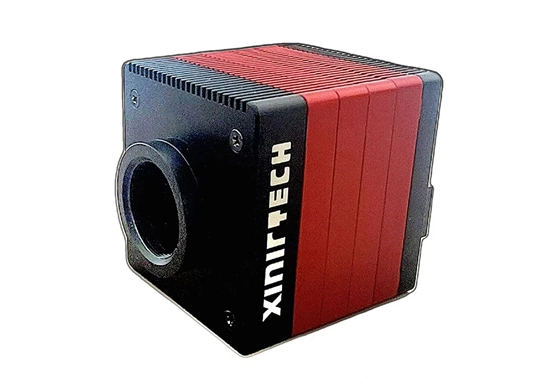
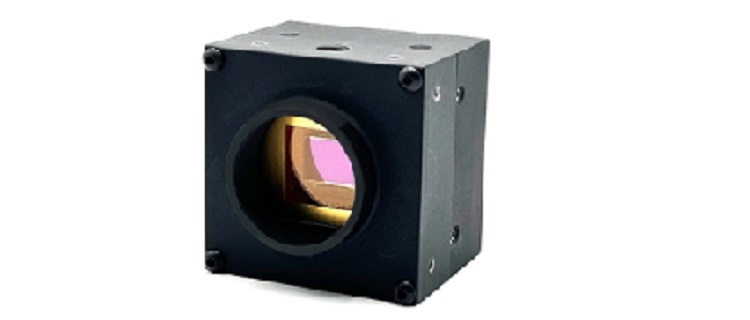
High speed infrared imaging has become essential in modern industrial inspection, scientific research, and precision manufacturing. Among SWIR imaging technologies, the high speed InGaAs camera plays a critical role in capturing fast, low-noise short-wave infrared (SWIR) images with high temporal resolution.
These cameras are widely used because they combine high frame rates, high sensitivity, and stable SWIR detection performance, making them suitable for dynamic environments where traditional imaging systems fail.
This article explains how high speed InGaAs cameras work, what determines their performance, and how to choose the right configuration based on real industrial requirements and product-level capabilities provided by SYTO Photonics.
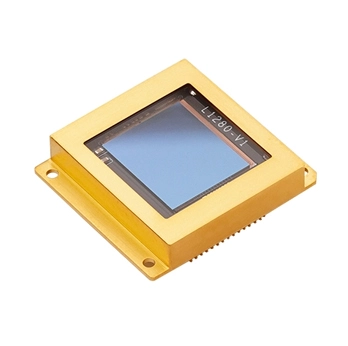
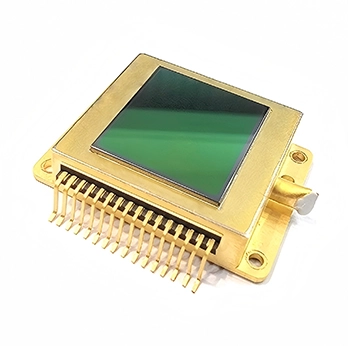
A high speed InGaAs camera is built around an InGaAs photodiode array sensor designed to detect SWIR wavelengths between 0.9 μm and 1.7 μm, a range widely used in industrial and scientific imaging.
Unlike thermal infrared cameras (such as VOx-based systems operating in 8–14 μm), InGaAs cameras detect photons directly rather than heat, enabling:
Faster response times
Higher signal fidelity
Lower motion blur in fast scenes
High speed InGaAs cameras are defined by their ability to operate at elevated frame rates:
Standard SWIR cameras: ~30–60 Hz
High speed systems: 100 Hz to 400+ Hz (depending on resolution and ROI)
This enables real-time observation of rapidly changing processes such as laser propagation, semiconductor wafer inspection, and high-speed material analysis.
The operating principle is based on the photoelectric effect in indium gallium arsenide semiconductors.
1. SWIR Light Incidence
Light in the 0.9–1.7 μm range enters the sensor.
2. Photon Absorption
InGaAs material absorbs photons and generates electron-hole pairs.
3. Charge Collection
Each pixel collects charge proportional to incident light intensity.
4. Readout via ROIC
A Readout Integrated Circuit (ROIC) converts charge into electrical signals.
5. Image Formation
The processed signals are reconstructed into high-speed SWIR images.
Because this is a photon-based detection process, InGaAs cameras offer:
Faster response than thermal detectors
Higher temporal precision
Superior low-light sensitivity
High speed SWIR imaging systems can be divided into two major architectures.
| Feature | Area Camera (2D) | Linear Camera (1D) |
| Structure | 2D pixel array | Single line detector |
| Example Models | 320×256 / 640×512 / 1280×1024 | 512×1 / 1024×1 |
| Imaging Mode | Full-frame imaging | Line scanning |
| Frame Rate Behavior | High-speed full images | Extremely high line rates |
| Applications | Machine vision, surveillance | Spectroscopy, conveyor inspection |
Selecting a high speed InGaAs camera requires understanding several critical parameters.
| Parameter | Typical Range / Value | Impact on Performance |
| Spectral Range | 0.9–1.7 μm (standard SWIR) | Defines detectable wavelengths |
| Frame Rate | 30–430 Hz (system dependent) | Motion capture capability |
| Resolution | 320×256 to 1280×1024 | Image detail level |
| Pixel Size | ~15 μm typical | Sensitivity vs resolution balance |
| Quantum Efficiency | >70% (typical high-grade sensors) | Signal strength efficiency |
Quantum efficiency (QE) describes how effectively a detector converts incoming photons into electrical signals. According to Wikipedia, higher QE directly improves sensitivity and imaging performance, especially in low-light SWIR environments.
High speed performance is fundamentally enabled by material physics.
Direct bandgap absorption in SWIR range
Fast carrier mobility
Low readout noise in modern ROIC designs
High quantum efficiency (>70% in many SWIR sensors)
According to NASA infrared imaging research, SWIR wavelengths are particularly suitable for high-speed optical sensing because they minimize scattering and allow stable photon detection in industrial environments.
High speed InGaAs cameras are widely used in precision industries where both speed and spectral sensitivity are critical.
Wafer defect detection
Microstructure analysis High-speed inline inspection
Beam profiling
Alignment monitoring
Optical system calibration
High-speed conveyor inspection
Quality control systems
Material classification
Chemical composition analysis
Continuous spectral scanning
Linear detector-based measurement systems
Many high-performance InGaAs cameras use thermoelectric cooling (TEC) to reduce noise and dark current.
Reduces thermal noise
Improves signal-to-noise ratio
Enables stable long exposure or high-speed imaging
In industrial-grade systems, TEC cooling significantly improves performance consistency in variable temperature environments.
Selecting the correct system depends on application requirements.
2D imaging → Area camera
Spectral or scanning → Linear camera
| Resolution | Recommended Use |
| 320×256 | Entry-level inspection |
| 640×512 | General industrial use |
| 1280×1024 | High precision imaging |
<100 Hz → Standard industrial applications
100–400 Hz → High-speed dynamic processes
Interface (USB3.0 or CameraLink)
System compatibility
Data processing capacity
According to MarketsandMarkets, SWIR imaging systems are experiencing rapid growth due to:
Expansion of semiconductor manufacturing
Increasing automation in industrial inspection
Demand for real-time machine vision systems
Adoption of AI-based optical inspection systems
High speed InGaAs cameras are becoming essential components in next-generation optical sensing platforms.
High speed InGaAs cameras enable precise, real-time imaging in the SWIR spectrum, making them essential for industrial inspection, spectroscopy, and scientific applications. By combining high frame rates, strong quantum efficiency, and flexible detector architectures, they deliver reliable performance in fast and complex environments. Understanding resolution, speed, and system design is key to selecting the right configuration for specific applications.
1. What is a high speed InGaAs camera used for?
It is used for SWIR imaging applications such as semiconductor inspection, laser analysis, and industrial machine vision.
2. What wavelength does an InGaAs camera detect?
Standard InGaAs cameras detect light in the 0.9–1.7 μm SWIR range.
3. What makes an InGaAs camera “high speed”?
High frame rates (100–400+ Hz) and fast readout electronics enable real-time imaging.
4. What is the difference between InGaAs and VOx cameras?
InGaAs cameras detect SWIR photons directly, while VOx cameras detect thermal radiation in LWIR (8–14 μm).
5. Why is cooling used in InGaAs cameras?
Cooling reduces noise and improves signal stability in high-performance imaging applications.
1. NASA – Infrared Radiation Overview
https://science.nasa.gov/ems/07_infraredwaves
2. Wikipedia
https://en.wikipedia.org/wiki/Indium_gallium_arsenide
3. Wikipedia
https://en.wikipedia.org/wiki/Quantum_efficiency
4. MarketsandMarkets