
Jul 09, 2026

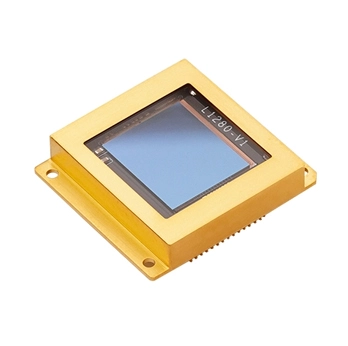
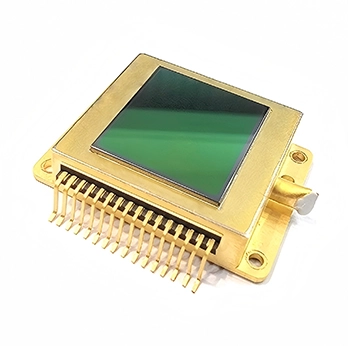
In today's fast-evolving world of optical and infrared detection, InGaAs (Indium Gallium Arsenide) sensors are redefining what’s possible. These sensors are engineered to detect light in the near-infrared (NIR) and short-wave infrared (SWIR) regions of the spectrum—where silicon-based sensors simply fall short. With their superior sensitivity, low noise characteristics, and versatility, InGaAs sensors are now a top choice across industries including defense, telecommunications, medical imaging, and industrial inspection.
Whether you're designing a high-precision inspection system or developing a next-generation scientific instrument, understanding the value of an InGaAs linear image sensor could transform the way you build and innovate.
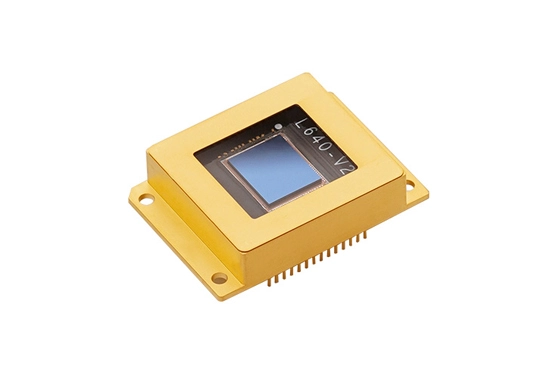
InGaAs sensors operate on the principle of photon absorption and charge generation in a compound semiconductor structure. When infrared light hits the sensor, photons with energies matching the InGaAs bandgap excite electrons into the conduction band, generating a measurable electrical signal.
Key features of InGaAs sensors include:
Spectral sensitivity in NIR/SWIR wavelengths (typically 900–1700 nm)
High quantum efficiency
Low dark current when cooled
Fast response times, suitable for high-frame-rate imaging
Their compatibility with standard CMOS readout circuits also makes them easier to integrate into existing systems.
Ingaas image sensors are prized for their exceptional sensitivity in the 900 nm to 1700 nm wavelength range—far beyond what traditional CCD or CMOS sensors can achieve. Advanced versions can detect even longer wavelengths, reaching up to 2.6 µm with specialized materials.
This unique sensitivity is crucial for detecting low-light infrared signals, even in harsh or dynamic environments. InGaAs sensors also boast:
Low dark current, especially when thermoelectrically cooled
Fast response times, enabling high-speed imaging
High quantum efficiency (QE) across the NIR band
These qualities make InGaAs sensors not just sensitive, but reliable and precise, even under challenging operating conditions.
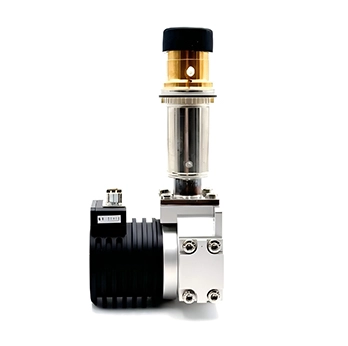
InGaAs sensors such as swir ingaas detector are valued for more than just their spectral range. Their exceptional InGaAs responsivity across near-infrared wavelengths delivers highly accurate detection and measurement performance. Some of the most compelling advantages include:
Superior NIR sensitivity: Far beyond what silicon or CCD sensors can detect
High signal-to-noise ratio (SNR): Even in low-light or uncooled conditions
Compact and lightweight designs: Ideal for drones, satellites, and handheld systems
Robust performance in harsh environments — including high temperatures and fluctuating lighting
These strengths make InGaAs sensors especially desirable in scenarios where performance, reliability, and precision are non-negotiable.
Because of their sensitivity and spectral range, InGaAs sensors are used in a wide variety of specialized and high-value applications:
Industrial Inspection: Used in semiconductor wafer inspection, solar cell testing, and material sorting (especially for plastics, liquids, and agriculture).
Telecommunications: Ideal for monitoring fiber optic networks, as they can detect infrared signals used in data transmission (typically around 1310 nm and 1550 nm).
Scientific Research & Spectroscopy: Critical for NIR spectroscopy, fluorescence imaging, and chemical analysis in research labs and environmental monitoring.
Defense & Security: InGaAs is the go-to sensor type for SWIR night vision, covert surveillance, and target identification.
Medical Imaging: Utilized in advanced tissue diagnostics, laser monitoring, and biomedical optics due to their non-invasive and deep-penetrating capabilities.
From factory floors to deep-space exploration, InGaAs sensors deliver the performance that high-end systems demand.
An InGaAs sensor is mainly used to detect near-infrared (NIR) and short-wave infrared (SWIR) light that standard silicon sensors cannot capture effectively. Common applications include industrial inspection, spectroscopy, fiber optic communication, medical imaging, semiconductor analysis, and defense surveillance.
A standard InGaAs sensor typically detects wavelengths from 900 nm to 1700 nm. Extended-range InGaAs sensors can reach beyond 2.0 μm, depending on the sensor structure and materials used. This wide spectral response makes InGaAs ideal for SWIR imaging and infrared analysis.
Compared with silicon sensors, InGaAs sensors offer much higher sensitivity in the NIR and SWIR wavelength ranges. Silicon performs well in visible light, while InGaAs can capture wavelengths invisible to standard CMOS or CCD sensors, making it the preferred choice for infrared imaging and low-light detection.