

Jul 06, 2026

With the rapid development in the fields of image recognition, night vision technology, remote sensing, and industrial inspection, the application of shortwave infrared (SWIR) detectors is becoming increasingly widespread. Outside the visible light spectrum, the shortwave infrared band (SWIR, typically 0.9-2.5 μm) offers advantages such as penetrating haze, sensing material properties, and providing night vision capabilities, making it important in military, security, energy, research, and other scenarios. Among these, Indium Gallium Arsenide (InGaAs) shortwave infrared detectors have become the mainstream solution in SWIR technology due to their excellent performance.
Initially, shortwave infrared detectors primarily adopted silicon-based or germanium-based materials, but these had certain limitations in terms of band coverage and sensitivity. Subsequently, detector technology based on HgCdTe (Mercury Cadmium Telluride) and InGaAs (Indium Gallium Arsenide) materials gradually became mainstream. Particularly, InGaAs shortwave infrared detectors are widely used in various portable imaging devices because of their high sensitivity, low dark current, and capability to operate without cryogenic cooling.
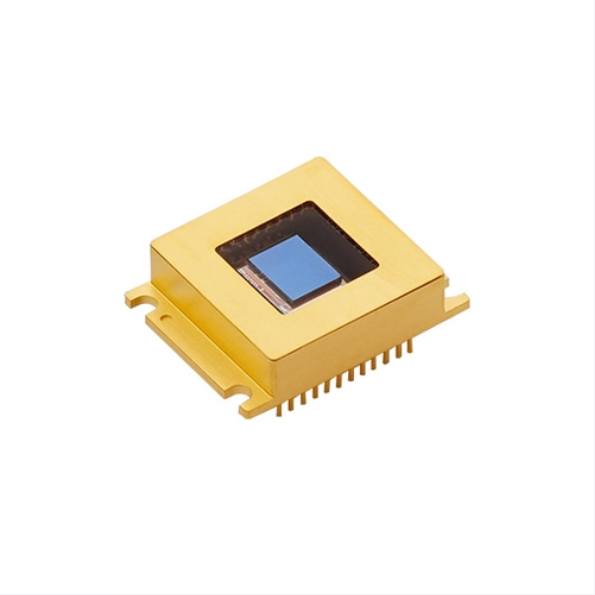
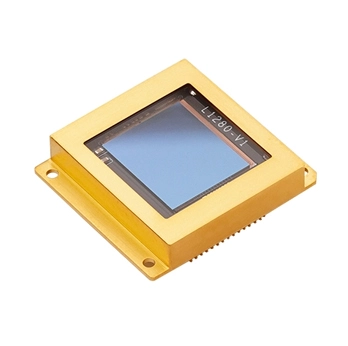
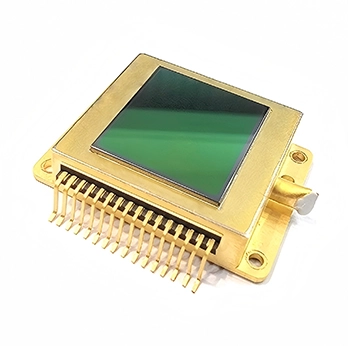
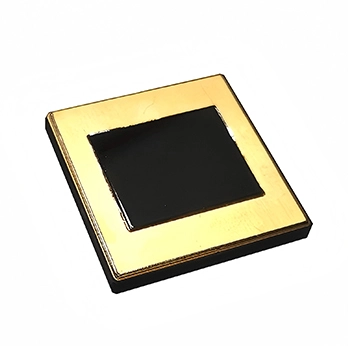
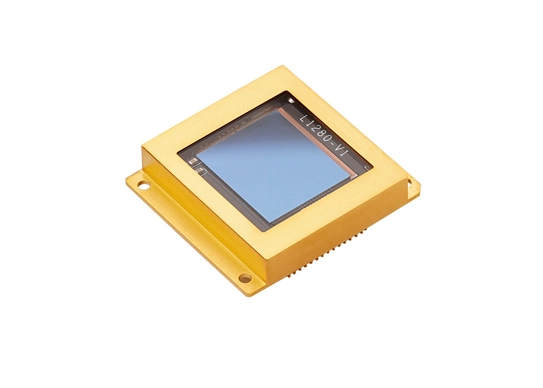
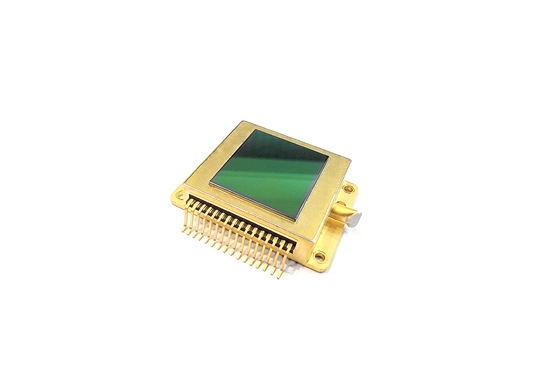
Structurally, shortwave infrared detectors can be classified into single-element, linear array, and focal plane array detectors. Focal plane array detectors are suitable for staring imaging scenarios, offering a larger field of view and higher frame rates. For example, the InGaAs shortwave infrared detector launched by SYTO has small pixel sizes, strong sealing, and wide environmental adaptability, making it suitable for long-range monitoring, scientific experiments, and remote sensing imaging under extreme weather conditions.
Evolution of InGaAs Shortwave Infrared Technology
Currently, the mainstream response band of InGaAs shortwave infrared detectors has been extended to 0.4-2.5 μm, significantly expanding their application range. This material characteristic gives them prominent advantages in laser detection, moisture analysis, agricultural visualization, environmental monitoring, and other fields.
To meet the demand for higher resolution and broader band response, major research institutions are continuously advancing new structural developments. For example, polarization detectors integrating micro-nano structures or metal gratings are becoming a new trend in InGaAs shortwave infrared sensors. In the future, such products will not only sense light intensity but also extract polarization information of targets, achieving more complex scene recognition.
Rise of CQD Shortwave Infrared Detectors
In recent years, CQD (Colloidal Quantum Dot) shortwave infrared detectors, as an emerging technology, have been rapidly developing. CQD detectors are constructed based on nanomaterials, offering advantages such as low cost, simple fabrication process, and adjustable structure. Their greatest advantage lies in their ability to flexibly cover multiple infrared bands, even extending to mid-infrared and long-wave infrared.
Although currently, CQD shortwave infrared detectors do not match the detection sensitivity and response speed of traditional InGaAs shortwave infrared technology, they show great potential in flexible devices, wearable infrared equipment, and civilian low-power imaging products. Multiple research institutions both domestically and internationally are accelerating the commercialization pathways, and it is expected that in the coming years, they will coexist complementarily with InGaAs detectors.
Currently, the international market for shortwave infrared detectors is highly competitive. The United States, France, Israel, and other countries hold significant leading positions in core technology and high-end products. For example, US-based SUI and UTC Aerospace Systems have introduced ultra-high-end InGaAs shortwave infrared detectors with resolutions up to 4k×4k and pixel pitches of only 5 μm. Belgian company Xenics offers multiple models covering bands from 0.4 to 2.35 μm, catering to industry-specific and multi-scenario needs. In the future, shortwave infrared detectors will develop towards miniaturization, integration, wide band, and multi-functionality. Particularly, the integration of high-resolution focal plane arrays and intelligent image processing systems will allow them to play a greater role in AI vision, autonomous driving, agricultural drones, medical imaging, and other frontier fields. Moreover, with advancements in CQD shortwave infrared detector fabrication technology, they will occupy more market share in the mid-to-low-end segment, promoting the transition of shortwave infrared technology from military high-end to widespread civilian use. Meanwhile, InGaAs shortwave infrared detectors will continue to maintain their technical advantage in high-resolution and high-sensitivity domains.
Shortwave infrared detectors play an increasingly key role in the global technological wave. Whether it is the traditionally advantageous InGaAs shortwave infrared or the rapidly rising CQD shortwave infrared detectors, they both open up broader spaces for future infrared imaging and intelligent sensing.