
Aug 25, 2025

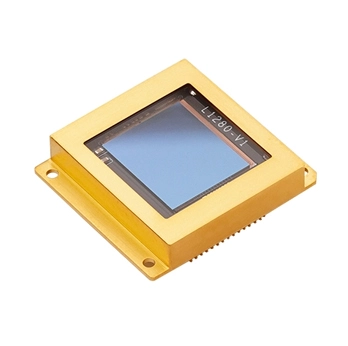
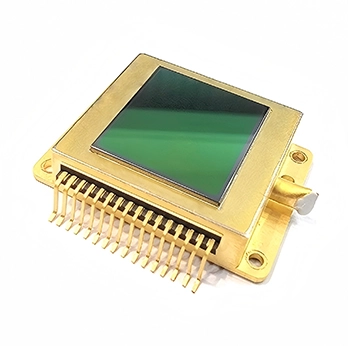
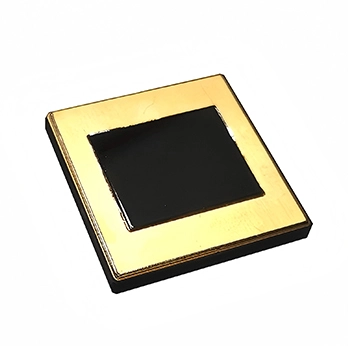
A focal plane array detector (FPA detector) is a two-dimensional array of photodetector elements placed exactly at the focal plane of an optical system (such as a lens or mirror). As a core component of modern infrared focal plane arrays, it plays a vital role in advanced imaging technologies. When electromagnetic radiation (e.g. infrared, visible light, or ultraviolet) is focused onto that plane, each pixel or “cell” in the FPA converts incoming photons into electrical signals. In practice, FPAs are used in imaging systems—including focal plane array cameras—to turn spatial patterns of radiation into digital images.
Unlike a single-element sensor that “scans” across a scene, a focal plane detector captures a full image in a single exposure (i.e. snapshot), which allows high-speed, real-time imaging with excellent spatial resolution. In infrared imaging, the FPA is the heart of the thermal camera: it senses heat (infrared photons) rather than visible light, which is why infrared focal plane array technology is widely adopted in thermal imaging systems.
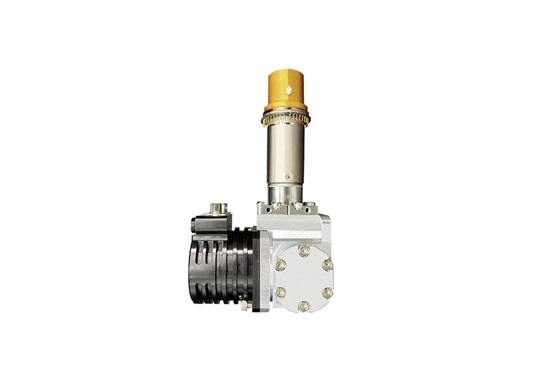
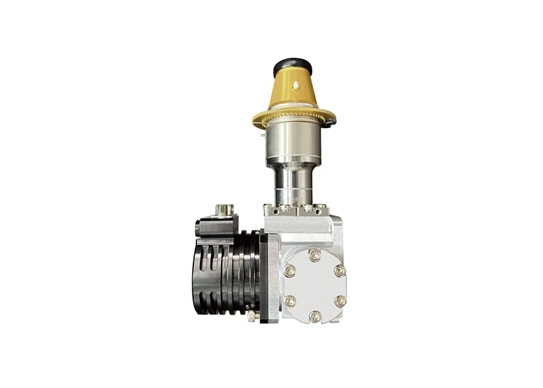
The SYTO Photonics MWIR 640×512 FPA detector (AS-ML640P20) is a prime example of high-performance infrared focal plane arrays. It features a 640 × 512 pixel array, a 15 µm pixel pitch, and is built on a Type-II superlattice (T2SL) material optimized for the mid-wave infrared (MWIR) band.
Because focal plane array sensor can rapidly convert spatial radiation patterns into electrical signals, they find broad use across many fields. Some key applications:
Thermal Imaging & Infrared Cameras
Surveillance, night vision, border security
Thermal condition monitoring in industrial plants
Fire detection and early warning
Building energy audits (finding insulation leaks)
Scientific & Astronomy Imaging
Infrared astronomy (detecting celestial heat sources)
Spectroscopy and imaging in lab instruments
Remote sensing from airborne or satellite platforms
Defense, Military & Security Systems
Missile guidance, target acquisition
Reconnaissance and thermal payloads
Low-visibility operations
Industrial Inspection & Non-Destructive Testing
Identifying hot spots or defects in electronics
Quality control in manufacturing
Thermal stress testing
Medical & Biomedical Imaging
Thermal diagnostics (skin temperature mapping)
Biomedical sensors (in research environments)
Because each of these applications demands different tradeoffs (sensitivity, speed, spectral band, noise, cooling, operability, etc.), specialized FPA detectors (like the AS-ML640P20) become essential.
In a thermal imaging system, the FPA is arguably the most critical component. Its performance directly dictates image quality, sensitivity, speed, and the overall capability of the thermal camera. Here's why FPAs are so significant:
Sensitivity and Noise Floor
The FPA must detect tiny temperature differences (millikelvin-level). Lower noise, high uniformity, and high operability ensure the thermal contrast is visible. The AS-ML640P20, for instance, offers a typical NETD (Noise Equivalent Temperature Difference) ≤ 20 mK.
Spatial Resolution
The number of pixels (e.g. 640 × 512) and pixel pitch (e.g. 15 µm) determine how fine detail the system can resolve. A higher-resolution FPA reveals finer thermal features.
Speed / Frame Rate
Since FPAs capture images in parallel (snapshot mode), they enable high frame rates, which is critical for dynamic scenes, real-time feedback, or tracking moving objects.
Uniformity & Operability
Real-world FPAs have imperfections. Good FPAs maintain high operability (percentage of functional pixels, often ≥ 99 %) and low response non-uniformity (e.g. < 5 %) so that the image is clean and usable. The AS-ML640P20 delivers response non-uniformity under 5% and operability ≥ 99.5%.
Spectral Band & Material
The FPA’s photosensitive material and spectral response define which infrared wavelengths it can detect. The AS-ML640P20 uses Type-II superlattice technology to sense in the 3.7 µm to 4.8 µm band (the mid-wave IR band)—making it suitable for many thermal imaging tasks.
Cooling & Stability
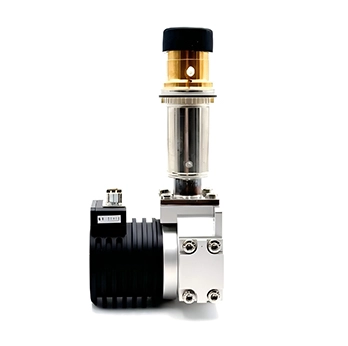
Some FPAs require cryogenic cooling (e.g. 80 K) to reduce dark current and noise. The thermal stability of the detector must be managed so that images remain consistent over time. The AS-ML640P20 has an operating temperature of 80 K.
In short: no matter how good the optics or electronics are, the FPA defines the thermal system’s “baseline” capability.
The detector array (i.e. focal plane array) fulfills several essential roles:
Spatial Mapping of Radiation
It spatially resolves the incoming radiation distribution. Each pixel corresponds to a small portion of the scene, so together they create a 2D image.
Photon-to-Electron Conversion
At each pixel, it absorbs incident photons and generates an electrical signal (via photoelectric effect or other mechanisms). That signal is proportional to the local radiant energy, which in thermal imaging correlates to temperature.
Parallel Imaging (Snapshot Mode)
Because all pixels collect simultaneously, the array enables capturing a full frame in one exposure—essential for real-time imaging, high frame rates, and dynamic scenes.
Signal Amplification & Readout
Many FPAs integrate readout circuitry (ROIC, read-out integrated circuits) that buffer, multiplex, and digitize the signal. The detector array and readout electronics must work harmoniously to maintain linearity, dynamic range, and low noise.
Calibrated, Uniform Output
The detector array must be calibrated (gain, offset, non-uniformity correction) so that each pixel outputs a consistent, corrected value across the field. Without this, the thermal image would have “fixed pattern noise,” bad pixels, or artifacts.
Supporting Advanced Modes
Some FPAs support windowed readout, anti-blooming, ITR/WR mode, or snapshot operation, giving flexibility in system design. The AS-ML640P20 supports snapshot mode, window readout, anti-blooming, etc.
Because it exemplifies many of the ideal traits of a high-performance focal plane array detector:
High Resolution & Fine Pixel Pitch: 640 × 512 array, 15 µm pitch
Low Noise (NETD ≤ 20 mK): enabling subtle temperature contrast detection
High Operability & Uniformity: operability ≥ 99.5%, response non-uniformity < 5%
Cryogenic Cooling: 80 K operation ensures low dark current
Flexible Modes & Readout: snapshot, ITR/WR, anti-blooming, window readout
Suitable Spectral Band: 3.7–4.8 µm MWIR, ideal for many thermal imaging tasks
By placing the AS-ML640P20 at the heart of your thermal imaging system, you build on a proven, high-performance foundation. Whether your application is security, industrial inspection, aerospace, or scientific imaging, a superior FPA ensures your system can detect finer thermal details, respond faster, and operate reliably.
Q: What are the main applications of focal plane array cameras?
A: Focal plane array cameras are widely used in:
Thermal imaging and infrared inspection
Industrial condition monitoring
Security and surveillance systems
Aerospace and defense technologies
Scientific research and astronomy
Their ability to deliver high-resolution, real-time imaging makes them indispensable in many industries.
Q: Why are infrared focal plane arrays important in thermal imaging?
A: Infrared focal plane arrays are the core of thermal imaging systems because they directly determine image quality, sensitivity, and accuracy. A high-performance infrared focal plane array enables detection of subtle temperature differences and improves overall system reliability.
Q: What is NETD in infrared focal plane arrays?
A: NETD (Noise Equivalent Temperature Difference) measures the smallest temperature difference an infrared focal plane array can detect. A lower NETD value indicates higher sensitivity and better thermal imaging performance.
Q: How do focal plane array detectors improve industrial inspections?
A: Focal plane array detectors enable fast and accurate detection of temperature anomalies in equipment. This helps identify faults such as overheating components, electrical issues, or structural defects, allowing for predictive maintenance and improved safety.
Q: Are focal plane array detectors used in space and scientific research?
A: Yes, infrared focal plane arrays are widely used in space exploration and scientific instruments. They help detect faint infrared signals from distant celestial objects and are essential in spectroscopy, remote sensing, and astronomical imaging.
