
Nov 27, 2025

Infrared imaging has become a foundational technology in modern sensing systems, enabling visibility beyond the capabilities of the human eye. Among various infrared detector technologies, VOx detectors (vanadium oxide detectors) are widely used due to their balance of performance, cost efficiency, and system simplicity.
Infrared imaging technology relies on precise sensor performance and material science. This article explains how VOx detectors work, their key specifications, and why they are widely used in modern uncooled thermal imaging systems.
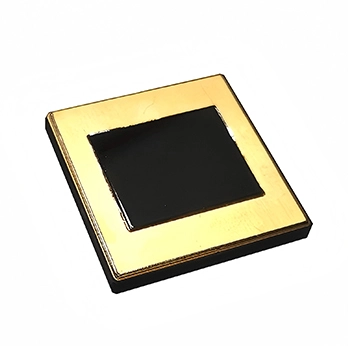
A VOx detector is a type of uncooled microbolometer infrared sensor designed to detect thermal radiation in the long-wave infrared (LWIR) spectrum, typically 8–14 μm. This wavelength range corresponds to the peak thermal emission of objects at ambient temperatures, as defined by Planck's radiation law and confirmed by NASA infrared science resources.
Unlike visible-light sensors, VOx detectors:
Do not rely on external illumination
Detect emitted thermal radiation
Enable imaging in total darkness or adverse weather conditions
These characteristics make them essential for applications where conventional cameras fail.
VOx detectors are built using microbolometer arrays, where each pixel responds to infrared radiation independently.
1. Infrared Absorption
Incoming LWIR radiation is absorbed by the VOx sensing layer.
2. Temperature Rise
The absorbed energy increases the temperature of the pixel.
3. Resistance Change
VOx material exhibits a high Temperature Coefficient of Resistance (TCR), typically in the range of −2%/K to −3%/K, as documented in microbolometer research summarized on Wikipedia.
4. Signal Readout
The resistance variation is captured by a Readout Integrated Circuit (ROIC) and converted into voltage signals.
5. Image Processing
Signals from all pixels are processed to generate a thermal image.
Compared to alternative materials such as amorphous silicon (a-Si), VOx offers:
Higher TCR → improved sensitivity
Better signal stability
Proven manufacturability for commercial systems
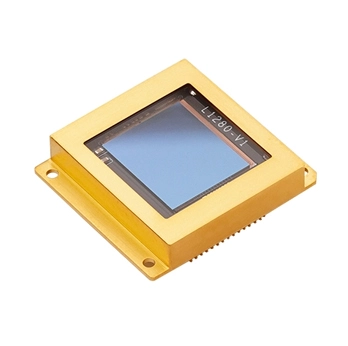
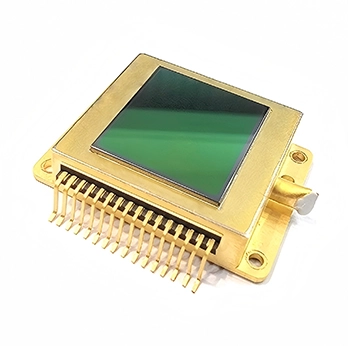
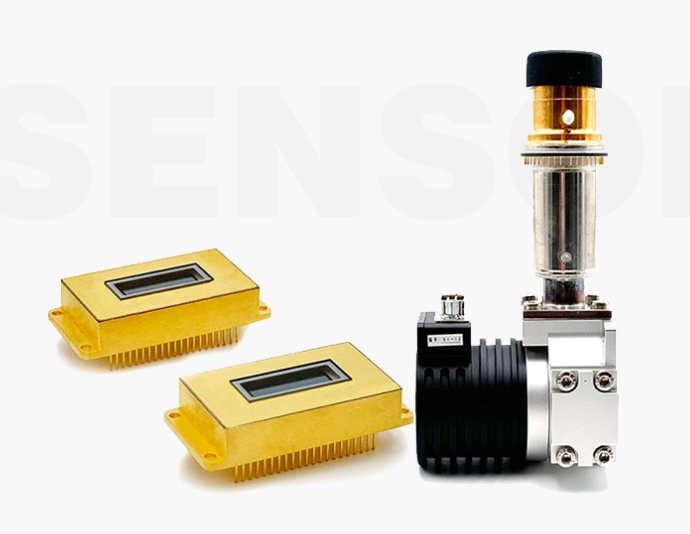
To properly evaluate a VOx detector, it is essential to understand its core technical parameters. The following table reflects industry-standard ranges and product-level specifications consistent with SYTO Photonics VOx image sensors.
| Parameter | Typical Value / Range | Source Basis |
| Spectral Range | 8–14 μm | NASA infrared spectrum |
| Resolution | 256×192 to 1280×1024 | Industry + product specs |
| Pixel Size | 12 μm / 17 μm | Product-level standard |
| NETD | <35 mK | Commercial VOx sensors |
| Frame Rate | 25–60 Hz | Imaging standard |
| Operating Temp | −40°C to +85°C | Industrial-grade sensors |
Noise Equivalent Temperature Difference (NETD) measures the smallest temperature difference a sensor can detect.
Typical high-performance VOx detectors achieve NETD < 35 mK, consistent with commercial product specifications
Lower NETD values indicate better sensitivity and image clarity
According to NASA, thermal resolution is directly tied to detector sensitivity, making NETD a critical parameter in infrared imaging systems.
VOx detectors provide strong thermal response without requiring cryogenic cooling systems, significantly reducing complexity.
Uncooled operation eliminates expensive cooling components, making VOx detectors suitable for large-scale deployment.
Microbolometer arrays enable lightweight and compact sensor modules, ideal for integration into portable systems.
VOx detectors operate reliably across a wide temperature range (commonly −40°C to +85°C in industrial-grade designs).
VOx detectors are used across a wide range of industries due to their adaptability and performance.
Night vision systems
Perimeter monitoring
Border control
Predictive maintenance
Electrical fault detection
Heat leakage analysis
According to the International Energy Agency, thermal imaging plays a critical role in improving energy efficiency by identifying heat losses in buildings and industrial systems.
Night vision enhancement
Driver assistance systems
Fever screening
Non-invasive diagnostics
Search and rescue
Environmental monitoring
| Feature | VOx Detector | Amorphous Silicon (a-Si) | Cooled Detectors |
| Cooling Requirement | No | No | Yes |
| Sensitivity | High | Moderate | Very High |
| Cost | Medium | Lower | High |
| Complexity | Low | Low | High |
| Application Scope | Broad | Entry-level | Specialized |
VOx detectors offer the optimal balance between sensitivity and cost, which is why they dominate commercial thermal imaging applications.
When selecting a VOx infrared image sensor, engineers and buyers should evaluate:
Higher resolution (e.g., 640×512 or above) improves image detail but increases system cost.
Applications requiring precision (e.g., medical or industrial inspection) benefit from NETD < 35 mK.
12 μm → higher spatial resolution
17 μm → improved sensitivity per pixel
≥30 Hz for real-time imaging
Higher rates for dynamic scenes
Power consumption
Interface compatibility
Environmental durability
Manufacturers such as SYTO Photonics provide VOx image sensors designed for diverse industrial and commercial applications.
The adoption of VOx detectors is closely tied to the growth of the thermal imaging market.
According to MarketsandMarkets, the global thermal imaging market is projected to exceed USD 5 billion by 2028, driven largely by demand for uncooled infrared technologies.
Additional industry insights include:
Increased use in smart manufacturing and Industry 4.0
Expansion into consumer-grade thermal devices
Growing role in autonomous systems and AI-driven imaging
These trends reinforce the long-term relevance of VOx detector technology.
VOx detectors are a cornerstone of modern infrared imaging, offering high sensitivity, reliability, and cost-effective operation without cooling. Their ability to detect thermal radiation in the LWIR range makes them indispensable across industries such as security, industrial inspection, and healthcare. With strong market growth and continued technological advancements, VOx infrared image sensors remain a leading solution for scalable and high-performance thermal imaging systems.
1. What is a VOx detector used for?
VOx detectors are used in thermal imaging applications such as surveillance, industrial inspection, automotive systems, and medical diagnostics.
2. What does NETD mean?
NETD (Noise Equivalent Temperature Difference) indicates the smallest temperature difference a detector can detect. Lower values mean better sensitivity.
3. Why do VOx detectors operate in the 8–14 μm range?
This range corresponds to the peak thermal emission of objects at ambient temperatures, as defined by infrared radiation physics.
4. Are VOx detectors better than cooled detectors?
VOx detectors are more cost-effective and simpler, while cooled detectors provide higher sensitivity but require complex systems.
5. What is the typical lifespan of a VOx detector?
Uncooled VOx detectors generally have long operational lifespans due to the absence of mechanical cooling components.
1. NASA – Infrared Waves
https://science.nasa.gov/ems/07_infraredwaves
2. Wikipedia
https://en.wikipedia.org/wiki/Microbolometer
3. Wikipedia
https://en.wikipedia.org/wiki/Infrared_detector
4. International Energy Agency
5. MarketsandMarkets