
Dec 01, 2025

Infrared imaging has become an essential capability in modern industrial automation and scientific research. Unlike visible-light cameras, IR image sensors can detect radiation beyond the visible spectrum, enabling observation of thermal, material, and spectral properties that are otherwise invisible.
In particular, SWIR (short-wave infrared) IR image sensors based on InGaAs technology are widely used in high-performance imaging systems due to their high sensitivity, fast response, and ability to capture fine material differences.
This article explains the key applications of IR image sensors across industrial and scientific fields, with a focus on real-world usage scenarios and system-level requirements aligned with SYTO Photonics product capabilities.
An IR image sensor is an optoelectronic device that converts infrared radiation (typically beyond 0.7 μm wavelength) into electrical signals to generate images representing thermal, spectral, or material information.
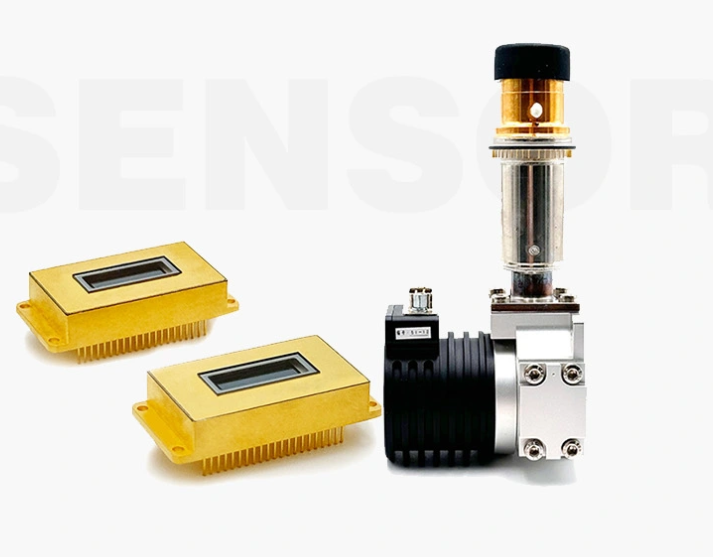
IR image sensors used in industrial and scientific systems are not limited to thermal imaging. They include multiple spectral ranges:
Near Infrared (NIR): ~0.7–0.9 μm
Short-Wave Infrared (SWIR): ~0.9–1.7 μm
Long-Wave Infrared (LWIR): ~8–14 μm
According to NASA, infrared radiation represents a significant portion of electromagnetic emissions from objects at room temperature, making it essential for material and thermal analysis.
Among these, SWIR imaging based on InGaAs sensors is particularly important for industrial applications due to its ability to interact with material composition rather than surface temperature alone.
IR image sensors can be broadly classified based on detection mechanism and spectral range.
| Type | Technology | Spectral Range | Key Strength | Typical Use |
| SWIR InGaAs sensor | Photodiode array | 0.9–1.7 μm | High sensitivity, fast response | Industrial & scientific imaging |
| NIR silicon sensor | CMOS-based | 0.7–1.0 μm | Low cost, visible overlap | Consumer & basic vision |
| Thermal IR sensor | Microbolometer (VOx) | 8–14 μm | Heat detection | Security & thermography |
SWIR InGaAs sensors are widely used in precision imaging systems due to their ability to detect subtle material differences that are invisible in visible or thermal bands.
One of the most important industrial applications of IR image sensors is semiconductor inspection.
Silicon becomes partially transparent in the SWIR range (~1.1 μm and above), allowing internal inspection of wafers and chips.
Wafer defect detection
Bonding inspection
Internal structure analysis
Micro-crack detection
According to semiconductor manufacturing research published in IEEE-related industry reports, SWIR imaging significantly improves defect detection rates in advanced chip fabrication processes by enabling subsurface visualization.
IR image sensors are widely integrated into machine vision systems for automated production lines.
Conveyor belt inspection
Material sorting
Surface defect detection
Quality control in high-speed manufacturing
IR imaging is especially valuable in environments where visible-light systems fail due to poor or inconsistent illumination. Unlike RGB imaging, IR sensors can detect material composition differences that are invisible to the human eye.
IR image sensors are essential in spectroscopy, especially using linear InGaAs detector arrays.
Chemical composition analysis
Material identification
Gas detection
Optical absorption measurement
Linear detectors (such as 512×1 or 1024×1 arrays) enable continuous spectral scanning, which is essential in scientific instrumentation.
The spectral response of InGaAs sensors in the 0.9–1.7 μm range is widely documented in optical physics literature, including references from Wikipedia.
IR image sensors are commonly used in laser system characterization.
Beam alignment
Intensity distribution measurement
Laser quality testing
Optical system calibration
SWIR cameras are particularly effective because many industrial lasers operate in wavelengths detectable by InGaAs sensors.
A key advantage is the ability to capture high-speed dynamic beam changes, which is essential in precision optical engineering.
Although not their primary use case, IR image sensors also support advanced security applications.
Night surveillance
Low-visibility monitoring
Border security systems
Smoke/fog penetration imaging
Unlike thermal cameras, SWIR imaging can capture reflected light from external illumination sources, enabling detailed scene reconstruction with higher spatial resolution in certain conditions.
IR image sensors are increasingly used in food and agriculture industries.
Moisture detection
Sugar content differentiation
Foreign object detection
Ripeness evaluation
SWIR imaging is particularly effective because water absorption characteristics are strongly visible in this spectral range.
Selecting the right IR image sensor requires understanding several key parameters.
Key Specifications
| Parameter | Typical Range | Impact |
| Spectral Range | 0.9–1.7 μm | Determines detectable materials |
| Resolution | 320×256 to 1280×1024 | Image detail |
| Pixel Size | 12.5–15 μm | Sensitivity vs resolution tradeoff |
| Frame Rate | 30–400 Hz | Motion capture capability |
| Quantum Efficiency | >70% (typical InGaAs sensors) | Signal strength |
According to Wikipedia, higher quantum efficiency directly improves photon-to-electron conversion efficiency, which is critical for low-light imaging systems.
In practical applications, selecting an IR image sensor is not only about individual specifications but also system integration performance. Engineers must evaluate multiple factors simultaneously, including processing bandwidth, synchronization capability, and thermal stability.
For example, high-speed industrial inspection systems often prioritize frame rate and readout speed over maximum resolution, while spectroscopy systems require higher spectral stability and low noise performance. In embedded systems, constraints such as interface bandwidth (USB3.0, CameraLink), data throughput, and real-time processing capability can directly influence system performance.
Thermal management is also important, especially in continuous operation environments, where sensor stability affects long-term measurement accuracy and calibration consistency.
According to MarketsandMarkets, the demand for infrared imaging systems is increasing due to:
Expansion of semiconductor manufacturing
Growth in automation and AI-based inspection
Increased adoption of SWIR imaging in industrial quality control
Key trends include:
Shift toward higher resolution (1280×1024) SWIR sensors
Integration with AI-based inspection systems
Expansion into portable and embedded imaging devices
IR image sensors are critical components in modern industrial and scientific imaging systems. From semiconductor inspection to spectroscopy and machine vision, SWIR-based InGaAs sensors provide high sensitivity, fast response, and unique material detection capabilities. As industries move toward higher automation and AI-driven inspection, IR imaging continues to expand its importance across multiple fields, forming a foundational technology for next-generation optical sensing systems.
1. What is an IR image sensor used for?
It is used to detect infrared radiation for industrial inspection, scientific measurement, spectroscopy, and machine vision applications.
2. What is the difference between SWIR and thermal IR imaging?
SWIR imaging detects reflected infrared light (0.9–1.7 μm), while thermal imaging detects emitted heat radiation (8–14 μm).
3. Why are InGaAs sensors used in SWIR imaging?
Because InGaAs materials have high sensitivity and efficiency in the SWIR wavelength range.
4. Can IR image sensors see through silicon?
Yes, SWIR wavelengths can penetrate silicon, enabling wafer and semiconductor inspection.
5. What industries rely most on IR image sensors?
Semiconductor manufacturing, industrial automation, spectroscopy, agriculture, and optical engineering.
1. NASA – Infrared Radiation Overview
https://science.nasa.gov/ems/07_infraredwaves
2. Wikipedia
https://en.wikipedia.org/wiki/Infrared
3. Wikipedia
https://en.wikipedia.org/wiki/Indium_gallium_arsenide
4. Wikipedia
https://en.wikipedia.org/wiki/Quantum_efficiency
5. MarketsandMarkets