
Sep 30, 2025

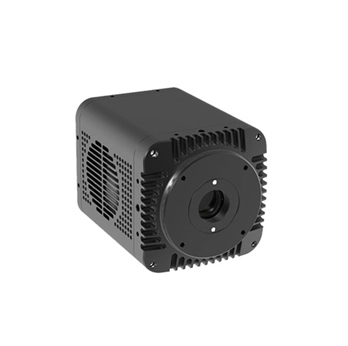
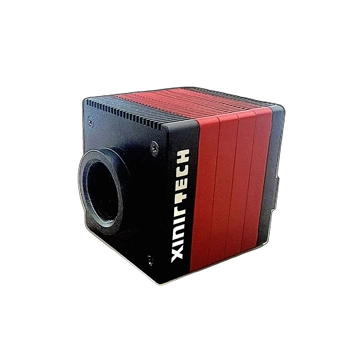
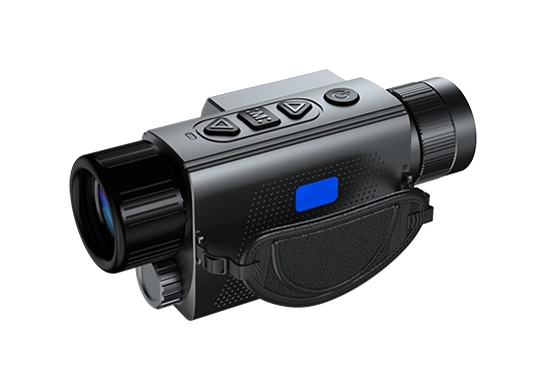
In the rapidly advancing automotive industry, driven by intelligence and connectivity, infrared thermal imaging technology is gradually shedding its role as an "expensive optional feature" and becoming a core sensing module in advanced intelligent driving perception systems. As a sensor that images through "heat," infrared thermal imagers are increasingly becoming the "second pair of eyes" for smart cars, thanks to their all-weather, all-scene sensing capabilities.
According to market research data, the global market for vehicle-mounted infrared thermal imagers is expected to grow rapidly from $2 billion in 2024 to $6.59 billion by 2030, with an average annual compound growth rate exceeding 20%. This trend reflects not only the higher safety sensing requirements of the automotive industry but also the rapid breakthroughs in key technologies behind infrared thermal imagers and the continuous maturity of the industrial chain.
Infrared thermal imaging technology relies on capturing 8~14μm infrared band thermal radiation emitted by objects to form images and does not depend on external light. Therefore, it performs exceptionally well in low-visibility environments such as nighttime, rain, fog, and sandstorms. Compared to traditional visual systems, infrared thermal imagers have the natural advantages of "passive imaging and anti-interference," making them a crucial part of intelligent driving "sensor fusion." As uncooled infrared thermal imagers gradually become more widespread, their high costs have significantly decreased. Additionally, the process of domestic production is continuously advancing.
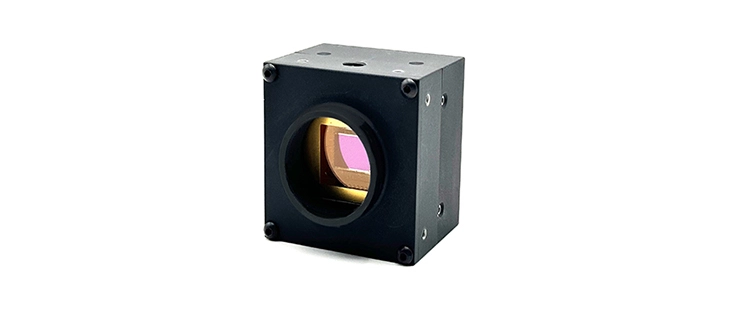
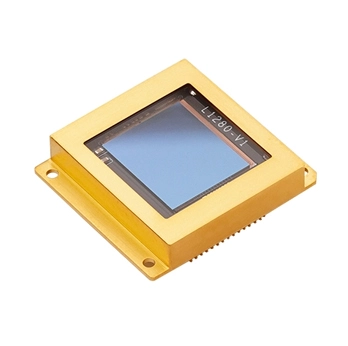
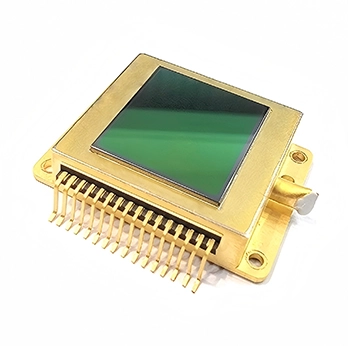
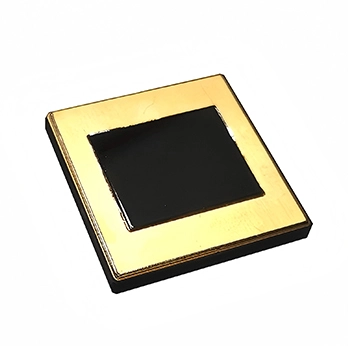
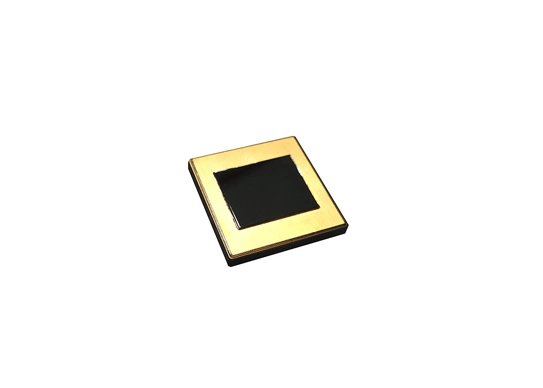
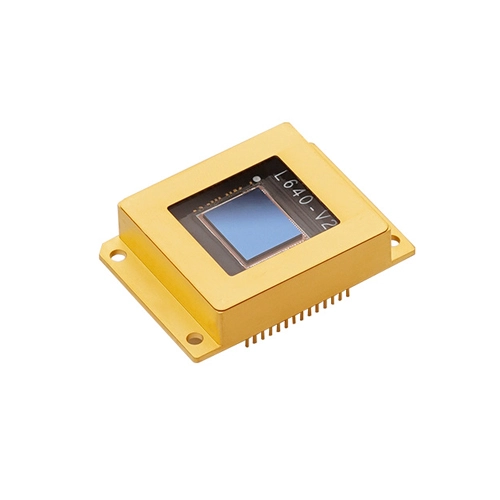
Traditional infrared thermal imagers only provide thermal images, but with the empowerment of AI algorithms, their sensing dimensions have achieved exponential improvements. The "infrared algorithm box" can perform deep recognition based on thermal images, providing real-time annotations of pedestrians, vehicles, obstacles, and other targets, and complete sound and light warnings within 0.1 seconds, thereby improving accident response times. Currently, high-end models like infrared cmos image sensor are already integrating multimodal sensing systems, including infrared thermal imagers, visible light cameras, and LiDAR, to achieve all-weather 360° sensing, which has significant advantages in long-tail environments such as fog and nighttime. The dual-spectrum tracking system further achieves dynamic target locking over long distances through pixel-level fusion technology and adaptive algorithms, providing critical support for L3 and above intelligent driving.
Night Driving and Active Warning
In night driving scenarios, infrared thermal imagers can detect life forms within a range of 8~200 meters, becoming an important "early warning" means for intelligent driving systems. The night vision system, based on infrared thermal imagers, marks the positions of people and animals and synchronously displays them on the dashboard and HUD. The Mercedes-Benz S-Class can even use flashing headlights to guide the driver’s attention to potential danger targets ahead. Statistics show that the nighttime accident rate is three times higher than during the day, and the performance of infrared thermal imagers in night vision assistance significantly reduces the risk probability.
Complex Weather and Long-Tail Sensing
In extreme weather conditions such as heavy rain, sandstorms, and strong light, traditional radar and visual systems often have limited performance. However, infrared thermal imagers—widely adopted by many leading camera sensor manufacturers—maintain clear imaging due to their independent thermal radiation sensing capabilities. Real-world data from Didi Robotaxi shows that in fog with visibility below 50 meters, the recognition accuracy of infrared thermal imagers is much higher than that of traditional sensors, making them an important guarantee for redundancy sensing in intelligent driving systems.
The application of infrared thermal imagers is no longer confined to external vehicle detection. Inside the vehicle, infrared sensing systems are becoming the new core of smart cabins. In-cabin sensing algorithms combined with infrared thermal imagers can accurately recognize states such as driver eye closure, yawning, and abnormal behavior and intervene through seat vibrations and voice systems. Meanwhile, infrared imaging can also be used for in-vehicle leftover detection, sending timely alerts about forgotten children or pets. In electric vehicle health management, infrared thermal imagers can be used to monitor the surface temperature of battery modules in real-time, providing early warning of thermal runaway risks 10 minutes in advance. Additionally, infrared thermal imagers can detect temperature anomalies in key components such as engines and brake discs, enabling vehicle pre-diagnosis and remote maintenance.
As sensors that "see heat," infrared thermal imagers have transitioned from military technology to the civilian automobile market, driving smart cars towards a safer, more intelligent all-scenario application era. In the future, with the further acceleration of AI integration, multi-band sensing, and domestic production processes, infrared thermal imagers are expected to become standard hardware for smart cars, injecting continuous innovative perception capabilities into the industry.